
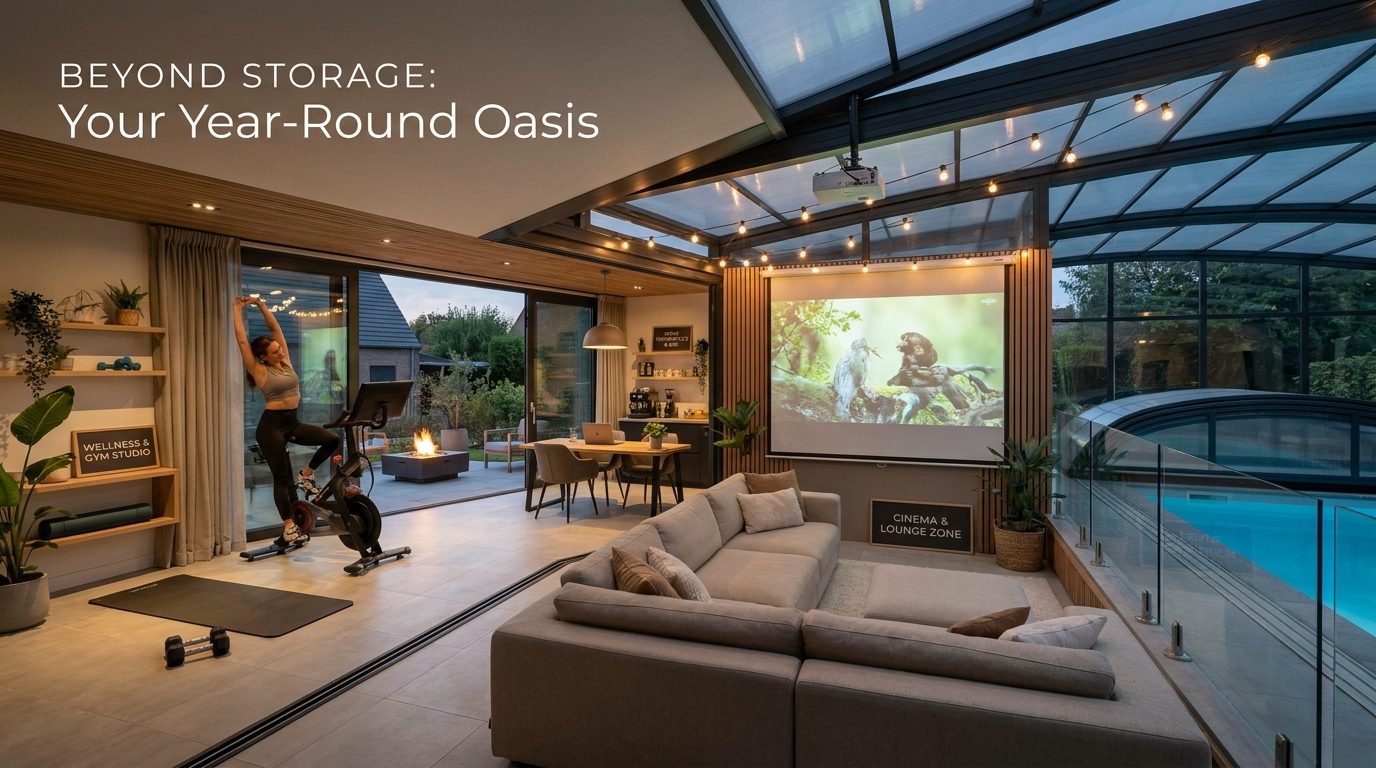
Most homeowners install a pool enclosure to swim in October instead of packing away the pool in August. That’s a perfectly good reason. But once the structure is up, a much bigger opportunity opens: a fully sheltered, climate-influenced, architecturally considered outdoor room that works for almost any lifestyle purpose imaginable.
The aluminium frame, UV-filtering glazing and solar heat retention that protect you during a cold swim also make the enclosure a genuinely comfortable, usable space when you’re not in the water at all. The question isn’t whether your enclosure can become something more. It’s simply deciding what you want it to become.
Why Pool Enclosures Are Ideal Multi-Use Spaces
A well-engineered aluminium pool enclosure already solves several problems that make outdoor rooms impractical in the UK. It keeps out wind, rain, insects and harmful UV rays while trapping solar energy to raise the interior temperature naturally, much like a conservatory or sun room does. On a cloudy January afternoon, a closed enclosure can feel noticeably warmer than the outside air without any additional heating at all.
Retractable or telescopic designs give you an extra layer of flexibility. When the weather cooperates, open the panels and you have an open-air terrace. When it doesn’t, close them and you have a sheltered room. Motorised drive systems mean this takes seconds rather than effort. That ease of transition is what makes dual-purpose use genuinely practical rather than aspirational.
The pool itself doesn’t disappear when you’re not swimming. It becomes a design feature: a reflective, calming centrepiece that defines the room around it.
A Poolside Fitness Studio
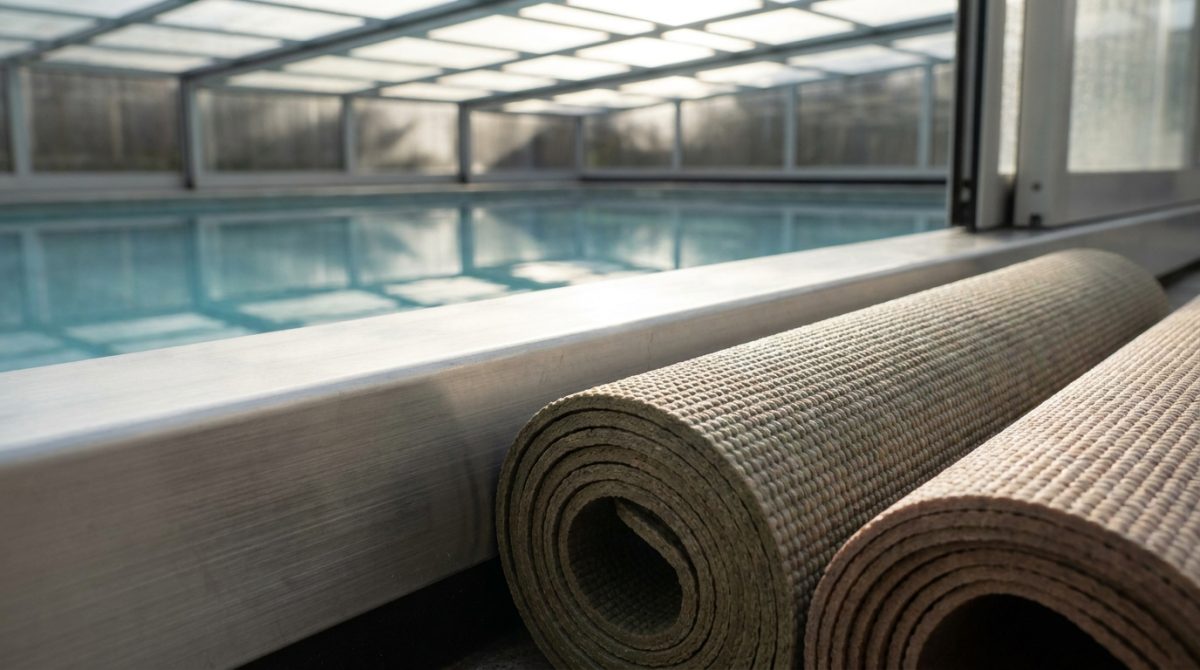
The space alongside a pool is almost tailor-made for exercise. You have a non-slip, easy-clean floor surface, natural light, and fresh air whenever you open the panels. Add a few square metres of rubber matting beside the pool and you have a yoga studio, Pilates space or stretching area that most dedicated gym rooms can’t match for ambience.
For strength training, a modest equipment set works well without cluttering the space. A suspension trainer attached to a wall anchor, a set of adjustable dumbbells, and a foldable bench take up very little floor area when not in use. Many homeowners find the combination of a short swim followed immediately by a workout in the same space genuinely changes how consistently they exercise, simply because there’s no commute and no weather barrier.
Cold-water exposure after a training session is a recovery technique used by professional athletes and weekend runners alike. Having the pool immediately available makes that routine effortless.
An Outdoor Cinema or Games Room
An enclosure with solid end walls gives you a projection surface or a clean wall to mount a weatherproof outdoor screen. A decent portable projector, a Bluetooth soundbar rated for outdoor use, and a handful of weatherproof loungers transform the space into a cinema that genuinely competes with anything you’d build inside the house, with the added novelty of watching films with the panels open on warm evenings.
Table tennis, foosball and pool tables all sit happily in a covered enclosure where humidity is managed and rain isn’t a factor. For families, this is often the more compelling argument: a dedicated games space that keeps teenagers out of the main house without sending them outdoors in the dark and cold.
The acoustic properties of an aluminium and glazing structure are surprisingly good for casual use. Sound bounces a little, but it doesn’t carry the way it does in a bare garden, making evening use far less likely to bother neighbours.
A Calm Workspace or Studio
Remote working introduced a lot of people to the idea of a garden office, but most garden offices are small, dark, and set well away from anything pleasant. A pool enclosure offers the opposite: abundant natural light, an architecturally considered structure, and a genuinely restorative view to look up at between tasks.
Setting up a workspace in the enclosure doesn’t require much. A weatherproof desk (teak and powder-coated aluminium both hold up well in the humidity of an enclosed pool environment), a quality chair, and a power supply run from the house are the practical essentials. A Wi-Fi extender or a powerline adapter handles connectivity. The key is positioning the desk to face away from the pool’s reflective surface on very bright days, or using a quality anti-glare screen.
Artists, photographers and designers often find the diffused, even light inside a pool enclosure closer to ideal studio conditions than anything achievable in a standard room. Architects and interior designers have noted that covered pool spaces dissolve the boundary between indoors and out in a way that supports creative thinking. That’s not a marketing claim. It’s simply what good natural light does.
A Poolside Entertaining Space
The most immediately achievable transformation is also one of the most rewarding. A pool enclosure configured for entertaining shifts from being a swimming facility to being a venue. The difference between a wet, functional pool surround and a proper entertaining space comes down to a few specific choices.
- Comfortable, weather-resistant seating arranged to face both the pool and each other, not just lined up against the walls
- Overhead lighting on a dimmer, either track lighting on the enclosure’s frame or weatherproof pendant lights hung at a sociable height
- A bar cart, outdoor kitchen unit or even a compact built-in BBQ station at one end
- Outdoor-rated rugs to define zones and add warmth underfoot
- Low planters with tropical or architectural planting to soften the aluminium structure
The enclosure’s solar heat retention means guests are comfortable on evenings when the garden outside would be too cool for sitting out. The insect barrier means summer evenings are genuinely pleasant rather than a battle with midges. These aren’t minor comforts. They’re the difference between a space people use enthusiastically and one they admire but avoid.
Getting the Foundations Right
None of these uses work well if the enclosure itself isn’t built to the right standard. Ventilation matters enormously: a space that traps condensation becomes uncomfortable for yoga, corrosive for electronics, and unpleasant for guests. Proper drainage, roof ventilation and moisture-tolerant finishes are non-negotiable if you intend to use the space beyond swimming.
Power access, lighting circuits and data cabling are all easier and cheaper to install before the structure goes up than to retrofit afterwards. If you’re designing a new enclosure, or considering a significant upgrade, treating it as a full outdoor room from the start changes the specification in useful ways: better floor finishes, additional power points, integrated lighting tracks and wall anchors for equipment all become part of the plan rather than awkward additions.
A pool enclosure built to last, with the right structure and the right specification, is one of the most genuinely versatile spaces a home can have. The pool is the centrepiece. Everything else is yours to design.
