
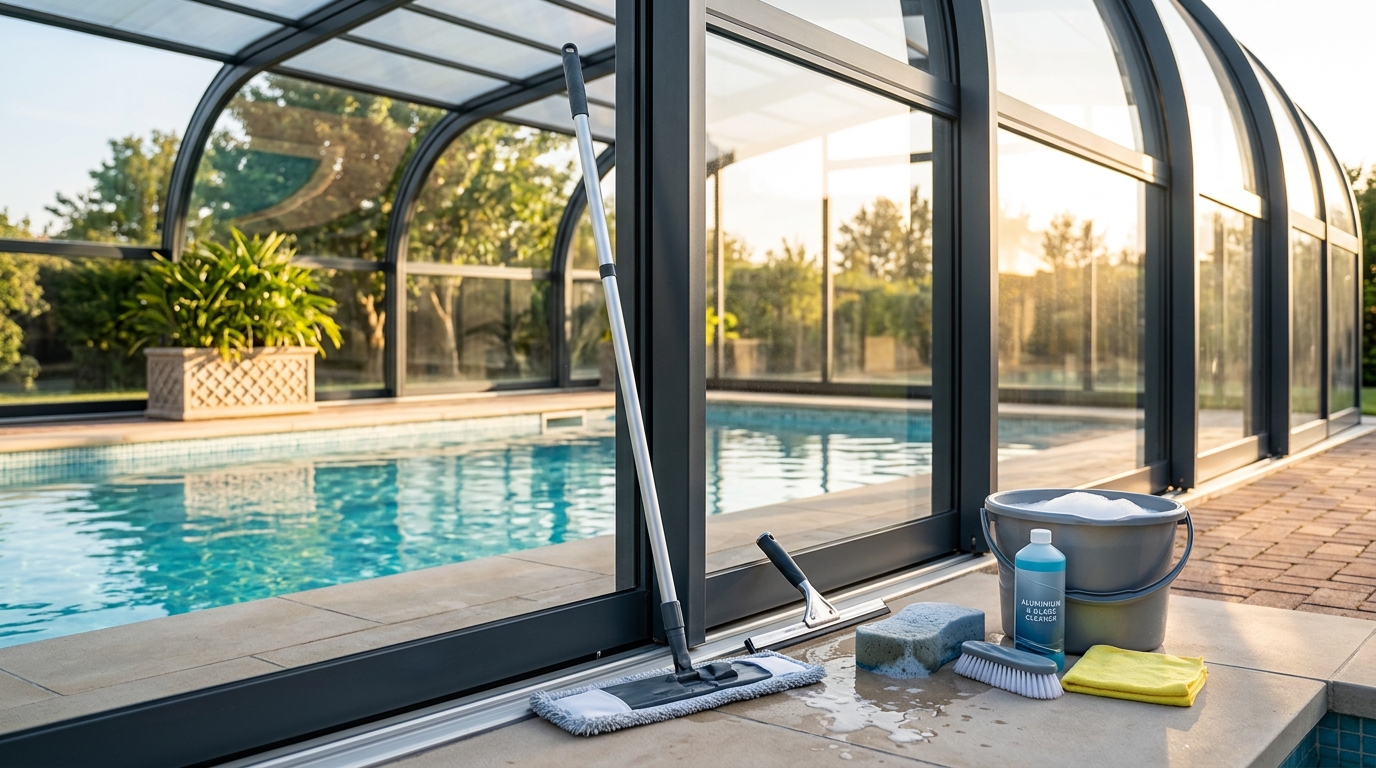
A pool enclosure does a lot of heavy lifting. It shields your pool from rain, wind, falling leaves, and the kind of British weather that turns a sunny morning into a soggy afternoon. But all that exposure means the frames, glass, and seals gradually accumulate grime, hard water deposits, and algae. Clean it wrong and you risk scratching the aluminium finish or drying out the rubber gaskets. Clean it right and the whole structure stays looking sharp for decades.
This guide cuts through the noise and tells you exactly which tools work, which ones cause hidden damage, and how to build a simple maintenance routine that fits around your life.
Why Aluminium and Glass Need Different Approaches
Aluminium pool enclosure frames are typically powder-coated, which gives them their colour and protects the metal underneath. Powder coating is tough, but it is not indestructible. Abrasive materials scratch the surface layer, letting moisture reach the aluminium beneath and starting a slow corrosion process you will not notice until it becomes a problem.
Glass or polycarbonate panels face a different set of challenges. Hard water leaves calcium and magnesium deposits that cloud the surface and make the panels look dirty even straight after cleaning. Poolside environments also accelerate limescale build-up because splashing chlorinated water evaporates quickly and leaves minerals behind.
The seals, gaskets, and rubber strips holding everything together are the third element. They are often overlooked during cleaning, but harsh solvents or mechanical scrubbing can cause them to dry out, crack, and eventually fail. A leaking seal lets water into the frame joints and is expensive to put right.
Choosing the Right Sponge and Cloth
Not all sponges are equal, and this is where most people go wrong. Standard kitchen sponges with a green or dark grey abrasive pad will scratch powder-coated aluminium on contact. The same applies to steel wool, wire brushes, and stiff-bristled brushes designed for outdoor paving.
For aluminium frames, the safest choice is a non-abrasive sponge made from reinforced nylon or soft foam. Several manufacturers produce pool-specific cleaning sponges, including three-pack sets designed for commercial use, which are crafted from durable plastic and reinforced nylon that give a firm clean without wearing away the finish. These are widely available online and worth stocking in multiples so you always have a fresh one to hand.
For glass and polycarbonate panels, microfibre cloths are your best option. They pick up surface grime without scratching, and they work effectively with just water for regular maintenance wipes. Keep a separate set of cloths for the frames and the glass so you do not transfer any residue between surfaces.
The Right Cleaning Products for Each Surface
Matching the product to the surface saves you money and protects your investment.
For powder-coated aluminium frames:
- Warm water with a small amount of pH-neutral washing-up liquid is sufficient for routine cleaning.
- Avoid anything that contains bleach, ammonia, or strong alkalis. These strip the powder coat over time.
- A dedicated aluminium cleaner (available from most hardware suppliers) is worth using twice a year for a deeper clean. Look for products labelled non-etching.
For glass and polycarbonate panels:
- White vinegar diluted 1:4 with water is highly effective against hard water deposits and limescale. Apply with a microfibre cloth, leave for two or three minutes, then rinse thoroughly.
- For heavier build-up, a dedicated limescale remover formulated for glass (not bathroom tiles) works well. Always check it is safe for the specific panel material before using.
- Avoid anything solvent-based on polycarbonate panels, as solvents cause crazing, a fine network of cracks just beneath the surface that permanently clouds the material.
For rubber seals and gaskets:
- Wipe with plain warm water and a soft cloth. Nothing harsher is needed for routine maintenance.
- Every six months, apply a silicone-based rubber conditioner or protector. This keeps the seals pliable and prevents the cracking that leads to leaks.
Tackling Hard Water Stains
Hard water staining is the most common complaint from pool enclosure owners in the UK, particularly in areas like the South East where tap water has a high mineral content. The white or grey deposits are calcium carbonate, and they bond firmly to glass over time if left untreated.
The most reliable approach is to act early. A weekly wipe-down of the lower panels and any area that regularly gets splashed prevents heavy build-up from forming in the first place. If deposits are already established, a paste made from bicarbonate of soda and white vinegar applied with a soft sponge can lift moderate staining without scratching.
For severe cases, a commercial hard water remover used with a non-scratch sponge and gentle circular pressure will shift most deposits. Rinse the area thoroughly immediately after to prevent the cleaner sitting on the surface and leaving its own residue.
Tools Worth Having in Your Cleaning Kit
A well-stocked kit makes the job faster and protects your enclosure from accidental damage caused by grabbing whatever is nearest.
- Non-abrasive foam or reinforced nylon sponges (keep at least three to hand)
- Microfibre cloths in two colours: one set for glass, one set for frames
- A telescopic window squeegee for reaching upper panels without a ladder
- A soft-bristled brush (natural or nylon bristles) for cleaning around joints and drainage channels
- A garden hose with an adjustable nozzle for rinsing
- pH-neutral washing-up liquid, white vinegar, and a silicone seal conditioner
Avoid pressure washers on the enclosure itself. The pressure can force water into joints, lift the edges of seals, and drive grit against the aluminium finish. A hose at normal pressure is enough to rinse away cleaning products and loose debris.
Building a Simple Maintenance Schedule
Consistency matters more than intensity. A quick clean every one to two weeks takes less than thirty minutes and prevents the kind of heavy build-up that turns into a significant job.
Weekly: Wipe down glass panels with a damp microfibre cloth. Clear debris from drainage channels and the base of the frame.
Monthly: Clean aluminium frames with warm soapy water and a soft sponge. Address any hard water spots on glass with a vinegar solution.
Every six months: Apply a silicone conditioner to all rubber seals. Inspect the frame joints for any signs of staining that might indicate a leak. Use a non-etching aluminium cleaner on the frames for a deeper refresh.
Keeping your pool enclosure clean is not complicated, but it does reward the right tools and a little regularity. Treat the surfaces with care and your enclosure will stay looking exactly as it did on installation day, year after year.
