
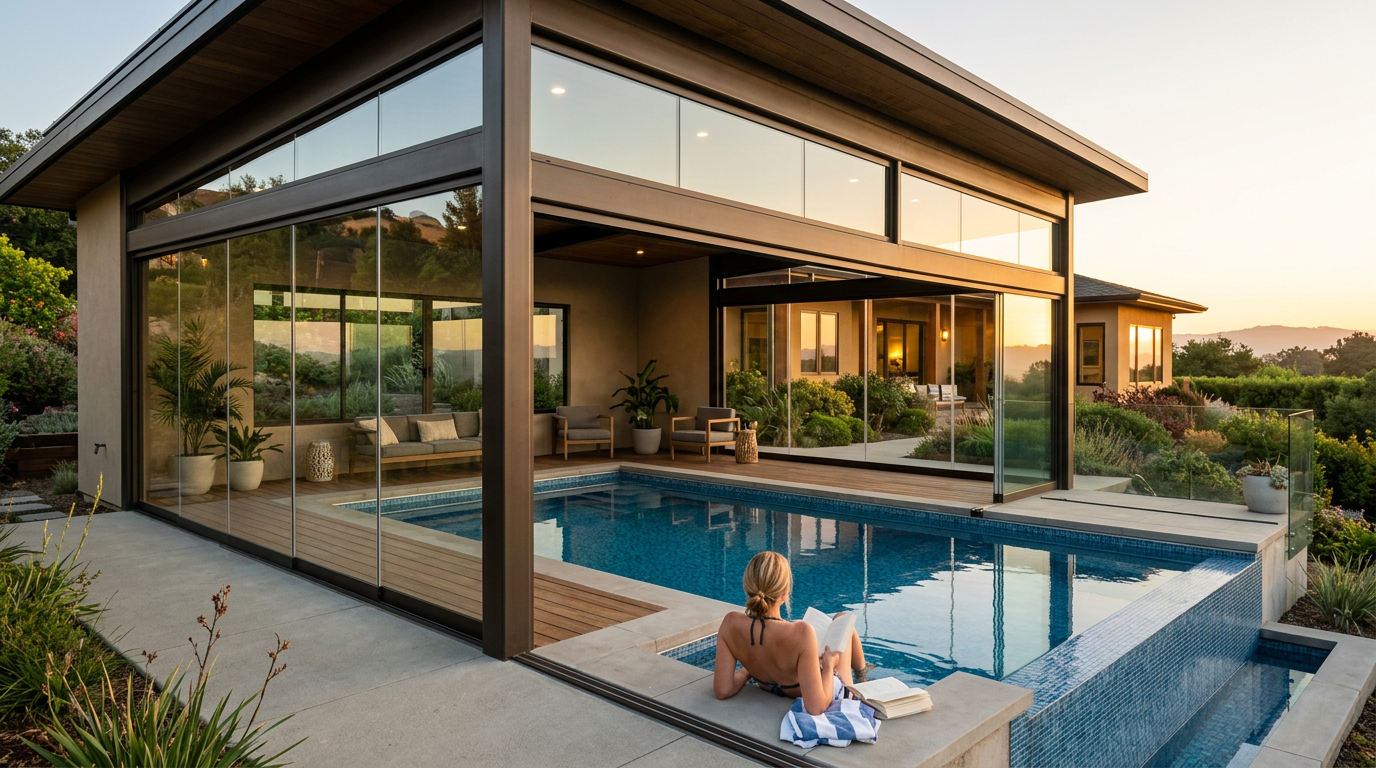
A pool enclosure is one of the most significant investments you can make in your home. It extends your swimming season, adds usable living space, and lifts the overall value of your property. But that does not mean every single decision has to carry a premium price tag.
Interior designers have long worked with a principle called high-low budgeting: spend heavily on things that are structural, permanent, and high-use, then pull back on elements that are decorative, seasonal, or easy to change later. That same logic maps almost perfectly onto a pool enclosure project, and applying it carefully can keep your budget on track without compromising the finished result.
Spend on the Structure First
The aluminium frame is the backbone of everything. It bears the load of glazing panels, manages wind and snow pressure, and determines how the enclosure performs over decades. Cutting corners here is one of the costliest mistakes a homeowner can make, not because of the upfront saving, which is rarely significant, but because of what can go wrong later.
Poorly specified extrusions flex under load, seals fail, and water finds its way in. Repairing or replacing a substandard frame after the fact almost always costs more than specifying the right one originally. A patented aluminium system designed and tested for UK climate conditions is worth every penny, because you will never have to think about it again once it is installed.
Ask your enclosure supplier about wall thickness, load ratings, and whether the system has been independently tested. These are structural questions, not cosmetic ones, and the answers matter.
Invest in High-Performance Glazing
Glazing is the second non-negotiable. It is the single biggest surface area in your enclosure, it directly determines how warm the space feels, how much UV enters, and how much condensation you deal with day to day. Polycarbonate and toughened glass options vary enormously in quality, and this is one area where the difference between mid-range and premium is genuinely noticeable in use.
Good solar-control glazing reduces heat gain in summer, retains warmth in winter, and protects swimmers from UV exposure year-round. A cheaper panel may look identical on the day of installation but will yellow, scratch, and lose insulation performance within a few years. Glazing is not cosmetic. It is a functional component, and it should be budgeted accordingly.
Hardware, Seals, and Fixings Are Not the Place to Economise
The small components that hold an enclosure together are easy to overlook when reviewing a quotation. Hinges, seals, gaskets, drainage channels, and fixings work constantly. Every time a door opens, every time rain runs across the roof, every time the panels expand in summer heat, these components are doing their job.
Stainless steel fixings and purpose-made pool enclosure seals resist the damp, chlorinated environment around a pool far better than generic alternatives. This is not a place for substitution. Think of it the same way experienced designers think about sofas or hardwood floors: if it is used every day and difficult to replace, invest in quality.
Where You Can Pull Back
Once the structure, glazing, and hardware are specified properly, there is genuine flexibility elsewhere. These are the areas where a sensible homeowner can economise without anyone ever noticing.
- Powder coat colour: Standard RAL colours cost less than bespoke finishes. Most suppliers offer a broad palette of whites, greys, and anthracite tones that look sharp and never date. A custom bronze or wood-effect finish carries a premium, and unless it ties directly into your home’s architecture, the standard range will serve you just as well.
- Landscaping around the enclosure: The plants, paving, and lighting outside the structure can absolutely be phased. A simple gravel surround and a handful of architectural plants look clean and considered. You can add to it over time as budget allows.
- Internal furnishings: Poolside loungers, side tables, and cushions are replaceable. Buy something decent rather than throwaway, but do not feel you need to furnish the enclosure to a showroom standard on day one. Outdoor furniture ranges refresh constantly, and tastes change.
- Decorative lighting: Practical waterproof lighting inside the enclosure should be specified properly at installation. But mood lighting, feature strings, or smart lighting systems can be added later. The conduit can go in now; the fittings do not have to.
- Planting inside the enclosure: A few mature architectural plants in large pots create an immediate sense of luxury. They cost far less than a designed planting scheme and can evolve as the space develops.
The Decision Rule That Makes It Simple
If you are ever unsure whether a particular element deserves the premium option, ask yourself two questions. First: is it structural, or is it decorative? Second: if it fails or I want to change it, how disruptive and expensive is that?
Anything that is structural and difficult to change later gets the investment. Anything that is decorative and easy to swap out later is a candidate for a more modest choice. That rule will not let you down across a project of this scale.
Getting the Balance Right From the Start
A good enclosure supplier will help you work through these priorities during the design stage. Be transparent about your total budget and ask them to flag which line items are genuinely non-negotiable and which carry options. Reputable manufacturers are not interested in selling you components you do not need, and they will have seen the consequences of the savings that do not pay off.
The high-low approach is not about buying cheap. It is about being deliberate. Put the money where the structure demands it, hold back where the aesthetics are flexible, and you will end up with an enclosure that performs flawlessly, looks exceptional, and does not leave you with the nagging feeling that a different choice would have served you better.
That is exactly the kind of project that rewards you every time you step into the water in February.
