
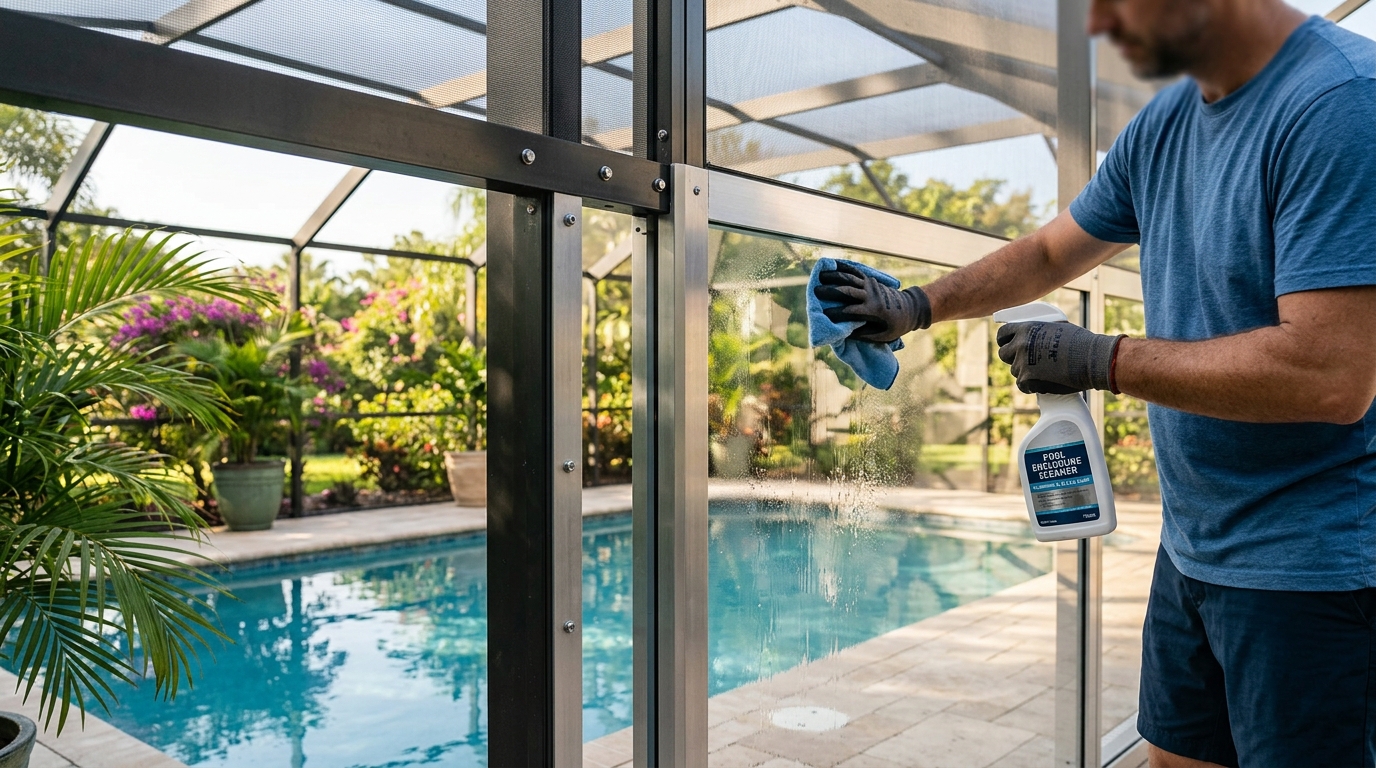
A pool enclosure is a serious investment. It extends your swimming season, protects the water, and transforms how your garden looks and functions. But like any structure exposed to the elements, it needs regular maintenance to stay in peak condition. The good news is that keeping aluminium frames and glass panels clean does not require specialist equipment or expensive proprietary products. What it does require is choosing the right cleaning agents and applying them correctly.
Understanding What You Are Working With
Aluminium enclosure frames are typically finished with a powder coat, which gives them their colour and corrosion resistance. Glass panels, whether toughened or polycarbonate, need their own approach. Treat them the same and you risk stripping the finish from the frame or leaving the glazing scratched and streaky.
The most common mistake homeowners make is reaching for a heavy-duty household cleaner and assuming stronger means better. On aluminium in particular, abrasive or highly alkaline products can degrade the powder coat over time, dulling the finish and eventually exposing the metal beneath. Once that protective layer is compromised, you are fighting a losing battle against oxidation and staining.
Cleaning the Aluminium Frames
For routine cleaning of aluminium frames, a mild, pH-neutral detergent diluted in warm water is all you need. Think along the lines of washing-up liquid rather than bathroom bleach. The same principle behind choosing a gentle laundry detergent for delicate fabrics applies here: non-abrasive formulas lift dirt and grime without attacking the surface underneath.
A soft-bristle brush or a microfibre cloth works well for applying the solution. Work in sections and rinse thoroughly with clean water as you go. Leaving soapy residue on the frame, especially in direct sunlight, can leave water marks that are harder to shift than the original dirt.
- Use a pH-neutral, non-abrasive detergent diluted in warm water
- Apply with a soft-bristle brush or microfibre cloth
- Rinse each section thoroughly before moving on
- Avoid pressure washing directly at joints and fixings
- Never use wire wool, scouring pads, or abrasive cream cleaners
For stubborn marks such as bird droppings, tree sap, or mineral deposits from hard water, let a damp cloth soaked in your mild solution sit on the affected area for a few minutes before wiping. This softens the residue without requiring you to scrub hard enough to damage the finish.
Cleaning Glass and Polycarbonate Panels
Glass panels respond well to a standard glass cleaner or a diluted white vinegar solution. Both cut through grease, water spots, and algae without leaving a film. If your enclosure uses polycarbonate glazing rather than toughened glass, treat it more gently still. Polycarbonate scratches more easily and should only ever be cleaned with a soft cloth and mild soapy water.
Avoid anything ammonia-based on polycarbonate. Ammonia, which appears in many general-purpose spray cleaners and window products, can cause polycarbonate to yellow and become brittle over time. Always check the label before reaching for a spray bottle.
- Glass panels: diluted white vinegar or proprietary glass cleaner
- Polycarbonate panels: mild soapy water only, no ammonia products
- Use a squeegee for large glass panels to prevent streaking
- Work from top to bottom so dirty water runs away from cleaned sections
Products to Keep Well Away From Your Enclosure
The cleaning aisle is full of products that are genuinely effective at their intended jobs but actively harmful to aluminium structures and glazing. Knowing what to avoid is just as important as knowing what to use.
- Bleach and chlorine-based cleaners: can corrode aluminium and degrade seals
- Solvent-based degreasers: strip powder coat finishes
- Abrasive cream cleaners: scratch both aluminium and polycarbonate
- High-pressure washers directed at seals and gaskets: force water into the structure
- Citrus-based degreasers at high concentration: acidic enough to pit aluminium over time
It is also worth being cautious with pool chemicals near the frame. Chlorine splash and chemical-laden splashback are among the most common causes of localised frame corrosion. A quick rinse of the lower frame sections after heavy pool use is a simple habit that pays dividends over the life of the structure.
Maintaining the Structural Elements
Cleaning is only part of the picture. Keeping your enclosure in genuinely good condition means paying attention to the moving parts and fixings at least twice a year. Rollers on sliding sections, hinges, and locking mechanisms all benefit from a light application of a silicone-based lubricant. Avoid oil-based lubricants, which attract dust and grit and can make the problem worse over time.
Check the rubber seals and gaskets around panels and joints. These keep water out and help the structure maintain its thermal performance. Signs of cracking, shrinking, or pulling away from the frame should be addressed promptly. Replacement seals are relatively inexpensive and straightforward to fit, but ignoring them can lead to water ingress that causes far more costly problems.
Inspect the fixings at base level, particularly if the enclosure is installed on a pool surround that gets regular foot traffic and exposure to pool chemicals. Stainless steel fixings are standard in quality installations, but it is worth confirming this and replacing any that show signs of corrosion before the problem spreads.
How Often Should You Clean?
During the swimming season, a light wash of the frames and panels every four to six weeks keeps things manageable. At the start and end of the season, a more thorough clean combined with a check of the seals, rollers, and fixings sets you up well for the months ahead.
In areas with heavy tree cover, or after storms, more frequent attention to the roof sections makes sense. Decomposing leaf matter holds moisture and can stain powder coat finishes if left to sit.
A well-maintained pool enclosure can easily last two decades or more. The cleaning and care routines that protect it are neither time-consuming nor expensive. Start with the mildest product that gets the job done, test on a small area if you are unsure, and work methodically. Your enclosure will repay the attention every time you step inside it, whatever the weather is doing outside.
