
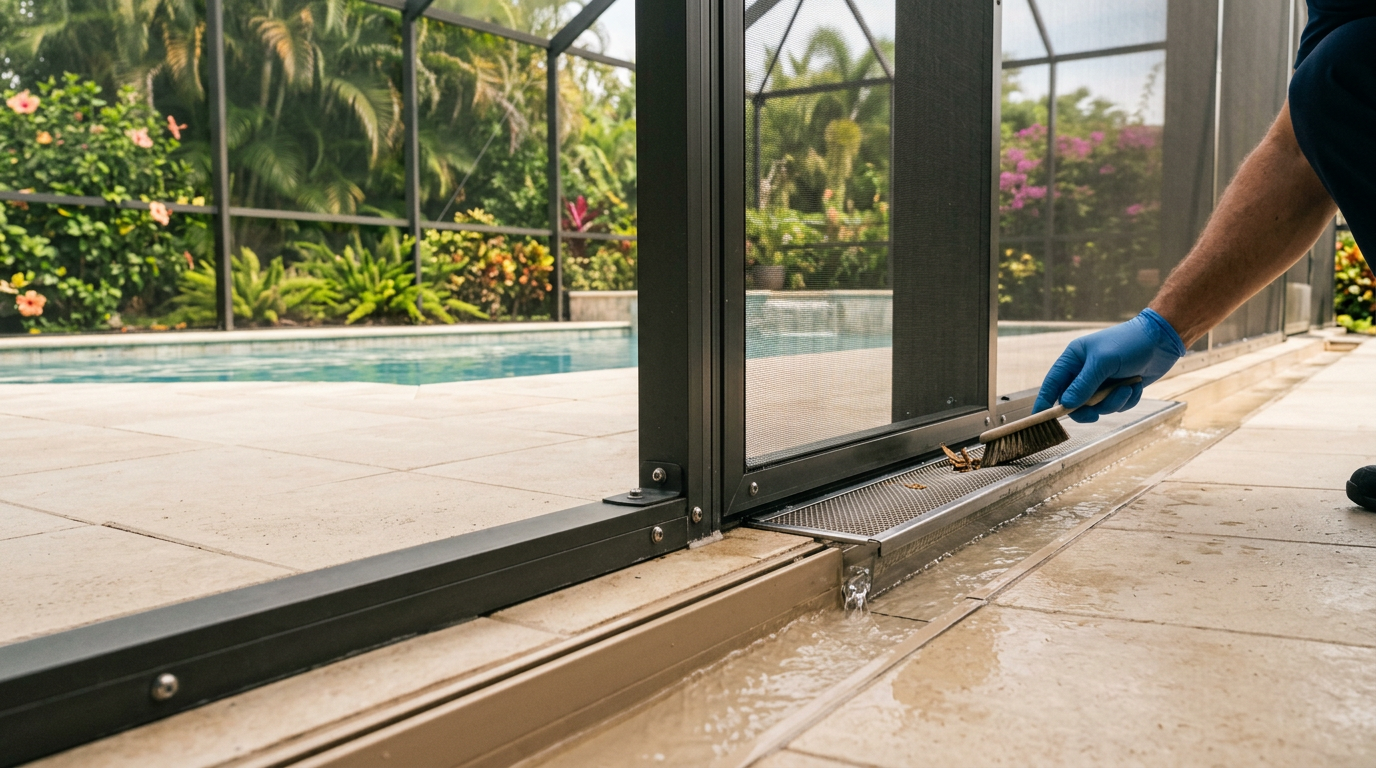
A pool enclosure is only as good as the drainage system keeping it dry and structurally sound. When water pools in channels, clogs filters, or sits against aluminium profiles, it accelerates wear and can compromise the whole structure over time. The good news is that most drainage maintenance takes less than an hour and requires no specialist tools.
Why Drainage Maintenance Matters More Than You Think
Most enclosure owners focus on the glazing, the tracks, and the operating mechanism. The drainage system tends to get ignored until something goes wrong. That is a mistake, because standing water is patient. It works its way into seals, encourages algae growth on frames, and in colder months can freeze inside channels and split them.
Aluminium is highly corrosion-resistant, but debris-filled channels trap moisture against gaskets and fixings that are not. A 20-minute check every few weeks during peak use, and a thorough inspection at the start and end of each season, will keep everything functioning as it should.
Check the Drainage Channels First
The base channels of your enclosure are the first place to inspect. Leaves, grit, and windblown debris collect here quickly, especially in autumn. When these channels block, water has nowhere to go and starts to back up against the lower frame sections.
Run a finger along each channel and clear any visible debris by hand before using water. Then flush the channel with a garden hose set to a low-pressure flow, working from one end toward the drain outlet. Watch where the water exits. If it moves freely and clears within a few seconds, the channel is open. If it pools and drains slowly, there is likely a partial blockage further along.
On sloped or curved enclosure designs, check the lowest point of each section carefully. Gravity pulls debris toward these spots and they block first.
Clearing Downpipes and Outlet Points
Most enclosures have discrete downpipe outlets built into the frame legs or base profiles. These are narrow and block easily with compacted grit and organic matter. A flexible bottle brush or a piece of wire bent into a hook is usually enough to clear them.
Once you have cleared any visible blockage, test the outlet by pouring a small amount of water directly into the channel above it. It should drain within a couple of seconds. If it does not, the blockage may be further down and you will need to flush from the outlet end using a hose nozzle pushed gently into the opening.
Never use high-pressure washers directly into downpipe outlets. The pressure can dislodge seals or force debris further into the system rather than clearing it.
Inspecting Pool-Side Filters and Skimmers
Your pool enclosure keeps debris out of the water, but no enclosure is completely sealed. Dust, pollen, and fine particulates still enter, and the pool filtration system works harder as a result. Keeping the pool filter clean is part of keeping the enclosure system working as a whole.
For cartridge filters, remove the cartridge and rinse it thoroughly with a garden hose fitted with a nozzle. Work from the top down, directing the spray into each pleat to dislodge trapped debris. Set the cartridge on a flat surface where the dirty water can drain away freely rather than sitting under the filter and being drawn back in. Rinse until the water running off looks clean rather than grey or brown.
For sand or DE filters, follow the backwashing process recommended by your filter manufacturer. The general principle is to reverse water flow through the filter medium to flush trapped debris out through a waste line. A rinse cycle after backwashing resettles the filter medium before you return the system to normal operation.
How often you clean the filter depends on pool use and the time of year. During high-use summer months with the enclosure open regularly, a weekly visual check and fortnightly cleaning cycle is a reasonable baseline. In winter, when the enclosure is doing more of the work keeping debris out, monthly checks are usually sufficient.
Checking Gaskets and Seals Around Drainage Points
Drainage outlets are transition points where water passes from inside the enclosure structure to outside. The seals and gaskets at these points take more wear than those on flat panels because they are constantly wet and dry in cycles.
During your seasonal inspection, run a finger around each drainage outlet seal and look for:
- Cracking or splitting in the rubber or silicone material
- Areas where the seal has lifted away from the frame
- Discolouration or black mould forming in a line along the seal edge
- Any visible gaps where water could track behind the frame profile
Small areas of lifting seal can be pressed back and secured with a compatible silicone sealant. If a gasket is cracked or perished across a significant length, replace it. Continuing to use a compromised seal invites water ingress into the frame extrusion itself, which is far harder to address.
A Seasonal Maintenance Routine Worth Keeping
Rather than reacting to problems when they appear, a short routine built around the seasons keeps everything manageable. The following schedule works well for most UK enclosure owners:
- Spring: Full channel flush, outlet inspection, seal check, first pool filter clean of the season.
- Summer (monthly): Quick channel clear, visual check of outlets, filter rinse if heavily used.
- Autumn: Thorough debris clear before leaf fall peaks, check downpipes are unobstructed ahead of heavier rainfall.
- Winter: Ensure drainage outlets are clear before the first frost, inspect seals for any deterioration from summer UV exposure.
None of these checks are technically demanding. The value is in doing them consistently rather than occasionally. A blocked outlet caught in October is a five-minute fix. The same blockage left through a wet winter can mean standing water inside the frame for months.
When to Call in Professional Support
Routine maintenance is well within the reach of any pool enclosure owner. But some situations benefit from a professional eye. If you notice water tracking in unexpected directions, persistent pooling after clearing all visible blockages, or any sign of frame movement near drainage points, it is worth having the structure assessed properly.
At Arch Enclosures, we are happy to advise on maintenance schedules specific to your installation and can carry out detailed inspections if you have any concerns. The enclosure is a long-term investment, and a small amount of attention to the drainage system each season protects that investment reliably.
