
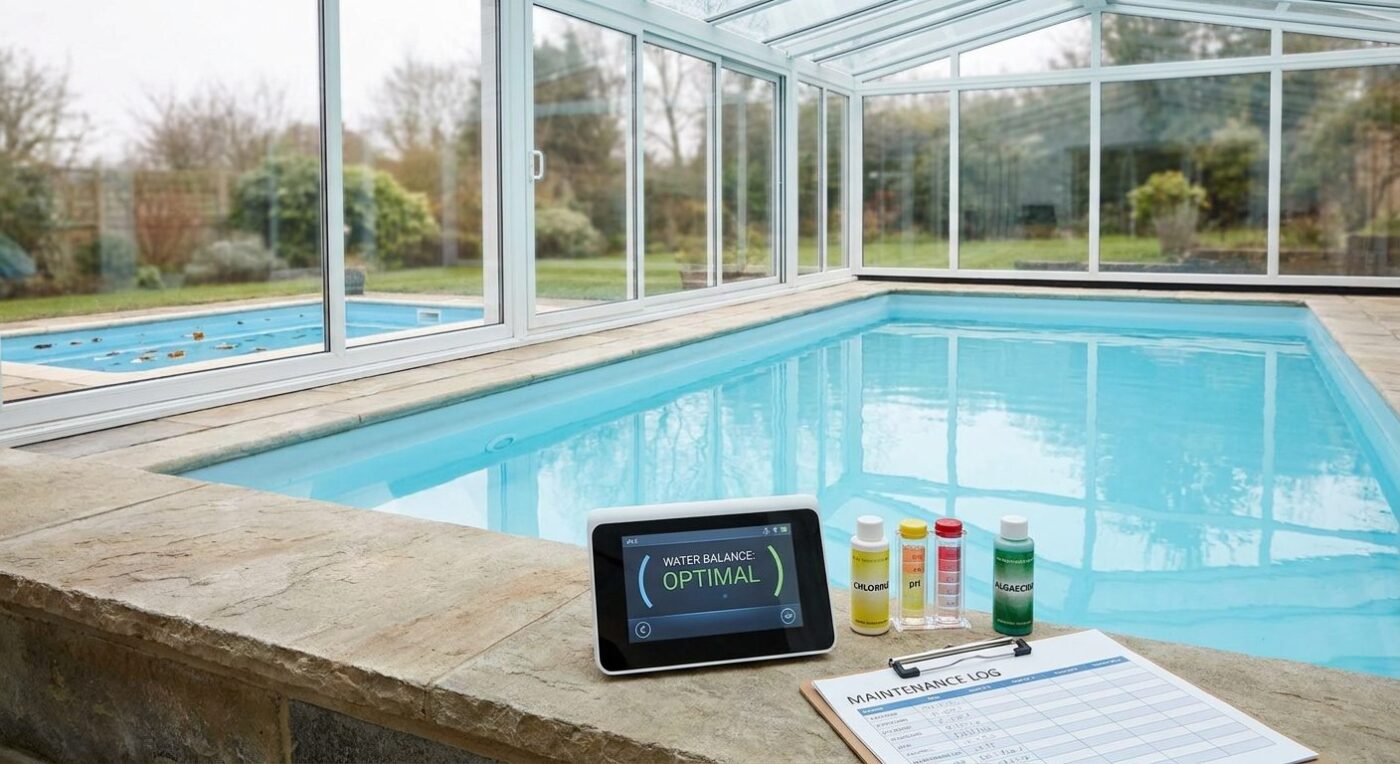
Algae does not need much of an invitation. Warm water, sunlight, and a handful of organic debris from a windy afternoon are enough to tip the balance in its favour. Open pools fight this battle constantly. Enclosed pools have a significant structural advantage from the start, and understanding why makes it much easier to keep your water genuinely clear rather than just chemically suppressed.
Why Enclosures Change the Game for Water Chemistry
The single biggest driver of chemistry instability in an outdoor pool is environmental input: falling leaves, airborne pollen, insects, bird droppings, and rain. Each introduces phosphates, organic compounds, and contaminants that consume chlorine and push pH in the wrong direction. An aluminium enclosure intercepts most of that input before it reaches the water.
Sunlight is the other major variable. Ultraviolet radiation degrades free chlorine quickly in an open pool, which is why outdoor pools often need stabiliser (cyanuric acid) to protect the chlorine from burning off within hours. Inside an enclosure, UV exposure is significantly reduced, meaning chlorine lasts longer between doses. This is not a trivial saving. In practical terms, it can halve the frequency at which you need to top up your sanitiser during the summer months.
There is also the matter of evaporation. An enclosed pool loses far less water to the atmosphere than an outdoor one, which matters because evaporation affects water chemistry in ways many owners do not anticipate. As water evaporates, dissolved solids, including calcium hardness and total dissolved solids, become more concentrated. Topping up with fresh water dilutes those concentrations and shifts the chemical balance again. Less evaporation means fewer corrections.

The Algae Problem in Open Versus Enclosed Pools
Algae requires three things to thrive: nutrients, warmth, and light. Open pools tend to have all three in abundance during the warmer months, which is why a lapse in chemical dosing for even a few days can turn clear water green. Inside an enclosure, the light situation changes considerably. Polycarbonate or toughened glass panels filter a meaningful proportion of direct sunlight, reducing the photosynthetic energy available to algae spores.
Nutrients are the second front. Phosphates from organic debris, dead skin cells, sunscreen, and environmental contamination are the primary food source for algae. Because enclosures block leaves, pollen, and airborne debris from entering the water, phosphate levels in enclosed pools tend to remain lower and more stable. Fewer nutrients mean a less hospitable environment for algae to establish itself.
This does not mean algae is impossible in an enclosed pool. Poor circulation, a weak sanitiser residual, or a stretch of very warm weather can still create conditions for growth. But the threshold at which a problem becomes visible is much higher, and the warning signs come more slowly, giving you time to correct the chemistry before things get out of hand.
Getting Your Chemistry Baseline Right
The starting point for a well-maintained enclosed pool is a stable chemical baseline. The fundamentals do not change whether the pool is enclosed or not, but an enclosure makes hitting those targets easier to sustain.
- pH: aim for 7.2 to 7.6. Below 7.0 and the water becomes corrosive to metal fittings and uncomfortable for swimmers. Above 7.6 and chlorine efficiency drops sharply, which creates the conditions for algae and bacterial growth.
- Free chlorine: 1 to 3 ppm is the standard working range for a domestic pool. In an enclosed environment with reduced UV, chlorine degrades more slowly, so you may find you need smaller, less frequent top-ups compared to an outdoor pool.
- Total alkalinity: 80 to 120 ppm acts as a buffer for pH, preventing large swings. Keeping alkalinity stable is one of the most effective things you can do to reduce the maintenance burden overall.
- Calcium hardness: 200 to 400 ppm. Too low and water becomes aggressive, corroding surfaces. Too high and you get scale deposits, particularly on polycarbonate panels and aluminium frames.
- Phosphate levels: aim to keep these below 200 ppb. Regular testing with a phosphate-specific kit will tell you whether the enclosure is doing its job of reducing environmental input.
Test your water at least once a week using a reliable test kit or electronic tester rather than basic colour-change strips. Digital testers give more accurate results and remove the guesswork from borderline readings.
A Practical Algae Prevention Routine
Prevention is substantially cheaper than cure. A full algae bloom in a pool of average domestic size can require shock treatment at several times the normal chlorine dose, followed by clarifier, filter cleaning, and a multi-day recovery period. Avoiding that scenario costs almost nothing compared to fixing it.
Weekly brushing of pool walls and the floor is worth doing even in an enclosed pool. Algae tends to establish itself first in low-flow areas: corners, steps, and the areas immediately below return jets. Brushing dislodges early-stage colonies before they have time to anchor properly and before they are visible to the naked eye.
Running your filtration system for a sufficient number of hours per day is equally important. A common rule of thumb is to turn over the total pool volume at least once every eight hours. In a well-enclosed pool, circulation is often the single most important variable in preventing algae, because stagnant water in dead zones allows conditions to develop that the sanitiser never reaches.
If you want extra insurance, a weekly dose of a polyquat-based algaecide (which does not foam and does not interfere with pH significantly) acts as a supplementary barrier. This is particularly worth adding during the height of summer when water temperatures inside an enclosure can be higher than you might expect on a warm day.
Shock Treatment: When and How
Even in a well-managed enclosed pool, a monthly shock treatment is good practice. Shocking oxidises the organic matter and chloramines that accumulate even without visible algae, keeping the water genuinely clean rather than just visually clear. Chloramines are responsible for the familiar sharp smell sometimes associated with indoor pools, as well as eye and skin irritation. They are a sign that the free chlorine is working hard and needs reinforcing.
Calcium hypochlorite granules are the most common shock product for domestic pools. Dissolve them in a bucket of water before adding to the pool, and always shock in the evening so the elevated chlorine level has time to circulate and dissipate before anyone swims. After shocking, run the filter continuously until the free chlorine drops back to the normal working range.
For those managing the chemistry of a pool inside a larger residential enclosure, smart dosing systems are worth considering. Automated chemical controllers measure pH and chlorine in real time and add small, precise doses to maintain target levels continuously, removing the peaks and troughs that create vulnerability windows for algae.
Managing the Enclosed Environment Alongside the Water
Water chemistry does not operate in isolation inside an enclosure. Temperature and humidity inside the structure affect how quickly certain chemical reactions happen and how fast the water itself changes. High humidity, for example, slows evaporation and reduces the concentration drift mentioned earlier. But it can also encourage surface mould and condensation on panels if ventilation is inadequate.
Keeping the enclosure well ventilated is not just a structural concern. It directly affects water quality by moderating the air temperature above the water surface, which in turn moderates the water temperature. Algae growth accelerates significantly above 28°C, so enclosures with good ridge ventilation or operable panels give owners meaningful control over that variable. Good ventilation also reduces chloramine off-gassing, which means air quality inside the enclosure stays fresh for swimmers.
It is worth noting that the benefits of enclosing your pool extend well beyond water chemistry. Blocking pollutants, phosphates, and pathogens from entering the water in the first place is, in effect, the most upstream form of algae prevention available. You can read more about keeping the physical structure clean in our guide to pool enclosure pest prevention, which covers how insects and organic debris interact with both the structure and the water quality beneath it.
The Long View on Reduced Chemical Spend
Running an enclosed pool costs less in chemicals than running an equivalent open pool in a typical UK climate. Less UV degradation means lower chlorine consumption. Less debris means lower phosphate levels and fewer algae interventions. More stable evaporation means fewer water top-ups and less chemistry correction. These are not theoretical savings.
In a medium-sized domestic pool of around 50,000 litres, the chemical saving over a full year can comfortably offset a meaningful portion of the enclosure’s running costs. Add in the reduced labour time and the elimination of the annual close-down and spring-open cycle that open pool owners face, and the practical case for enclosing your pool becomes clear well beyond simply extending your swimming season.
Keeping water crystal clear is, ultimately, a matter of reducing the variables that work against you. An enclosure does not remove the need for good water management, but it tilts almost every relevant variable in your direction before you add a single gram of chemical.
