
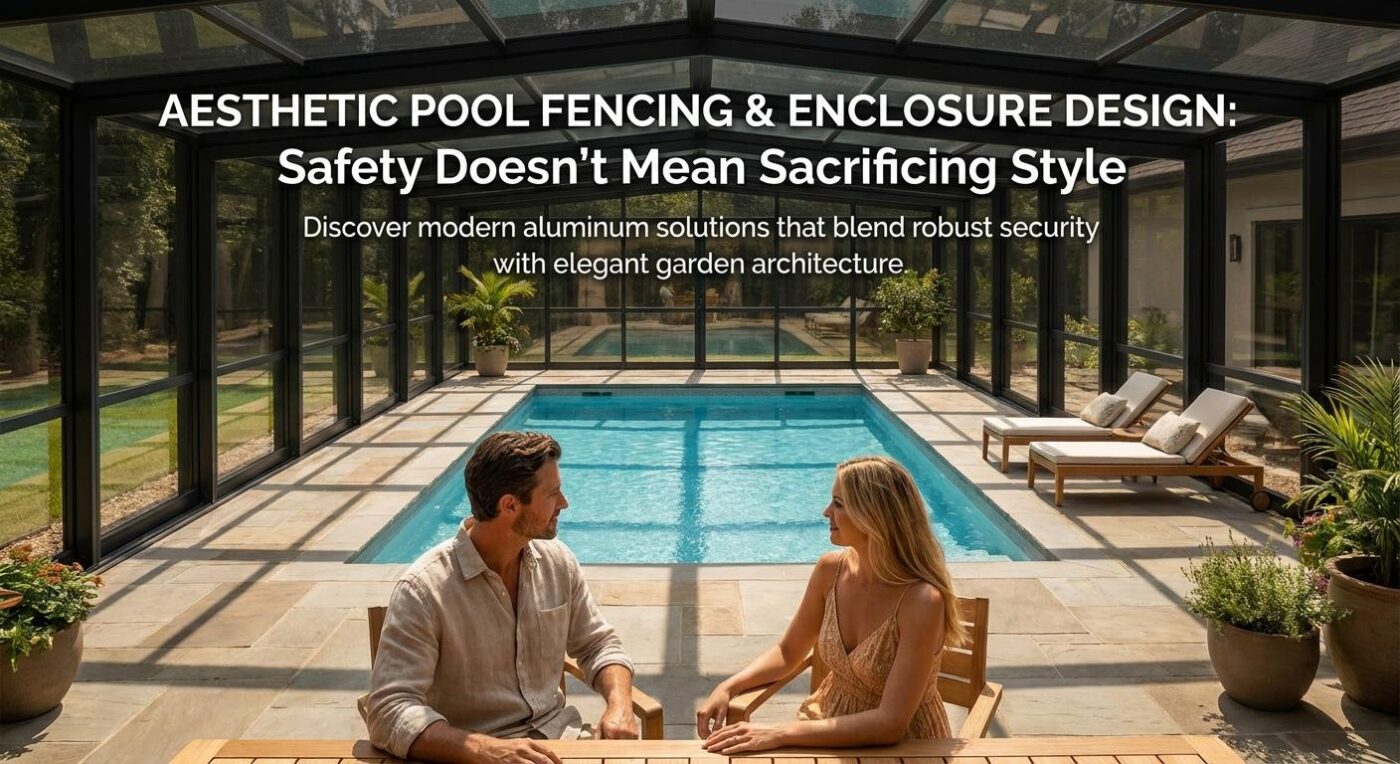
The old assumption that pool safety and garden aesthetics are in permanent conflict has been quietly dismantled over the past decade. Modern aluminium enclosures and pool fencing systems now do something that older barriers never managed: they contribute to how a garden looks rather than simply interrupting it.
For UK homeowners investing in a pool, this shift matters enormously. A structure that sits beside your house for decades should earn its place visually, not just functionally. The good news is that materials, profiles, and design thinking have all advanced to the point where you genuinely do not have to choose one over the other.
Why the Safety-First Approach No Longer Means Ugly-First
Pool safety has always been non-negotiable. Children, pets, and unsupervised access to open water represent real risk, and any responsible pool owner knows that a physical barrier is a fundamental part of responsible ownership. What has changed is the sophistication of the products delivering that protection.
Aluminium as a structural material is central to this change. It is corrosion-resistant, lightweight relative to its strength, and takes a wide range of finishes, from brushed silver to powder-coated anthracite. That versatility means the same material that forms a robust, rigid enclosure frame can also look refined and considered rather than industrial. family pool enclosure design has evolved to reflect exactly this thinking, with structures that work as hard visually as they do structurally.
Low-Profile Enclosures: Maximum Protection, Minimum Visual Interruption
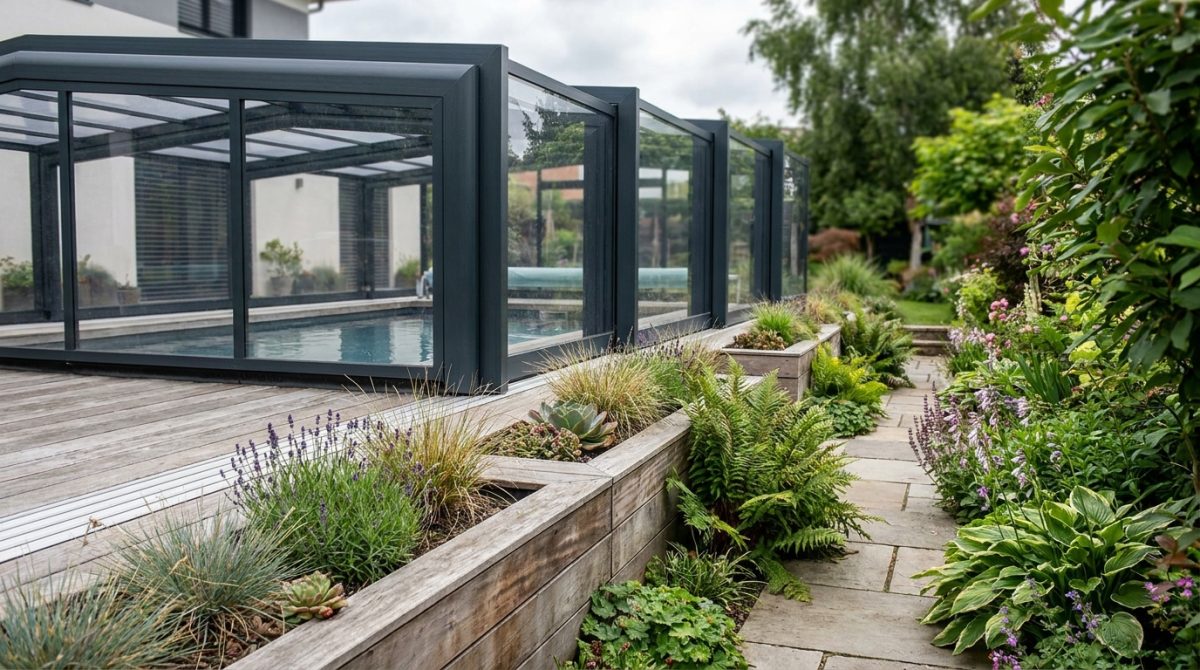
One of the most compelling developments in pool enclosure design is the low-profile format. These structures sit close to the water line, covering the pool without rising high enough to dominate the garden view. Products like the IMPERIA and CORONA systems use dual-track designs that keep the enclosure compact while still protecting the water from debris and adverse weather.
From a design perspective, low enclosures behave more like a landscaping feature than a building. They allow sightlines across the garden to remain largely unobstructed, which is particularly valuable for smaller UK gardens where preserving the sense of space is essential. When the sections retract, the pool opens up entirely and the enclosure effectively disappears into the background.
The panel material plays a significant role here too. Multiwall polycarbonate is the most common choice in the UK market, offering good thermal performance and impact resistance. Clear polycarbonate maintains visual transparency, so the water remains visible and the enclosure does not create a visual block. Tempered safety glass is an alternative for those where appearance is a top priority, though it carries a higher price point and requires more frequent cleaning to stay clear.
Telescopic and Retractable Systems: Flexible Enough for British Weather
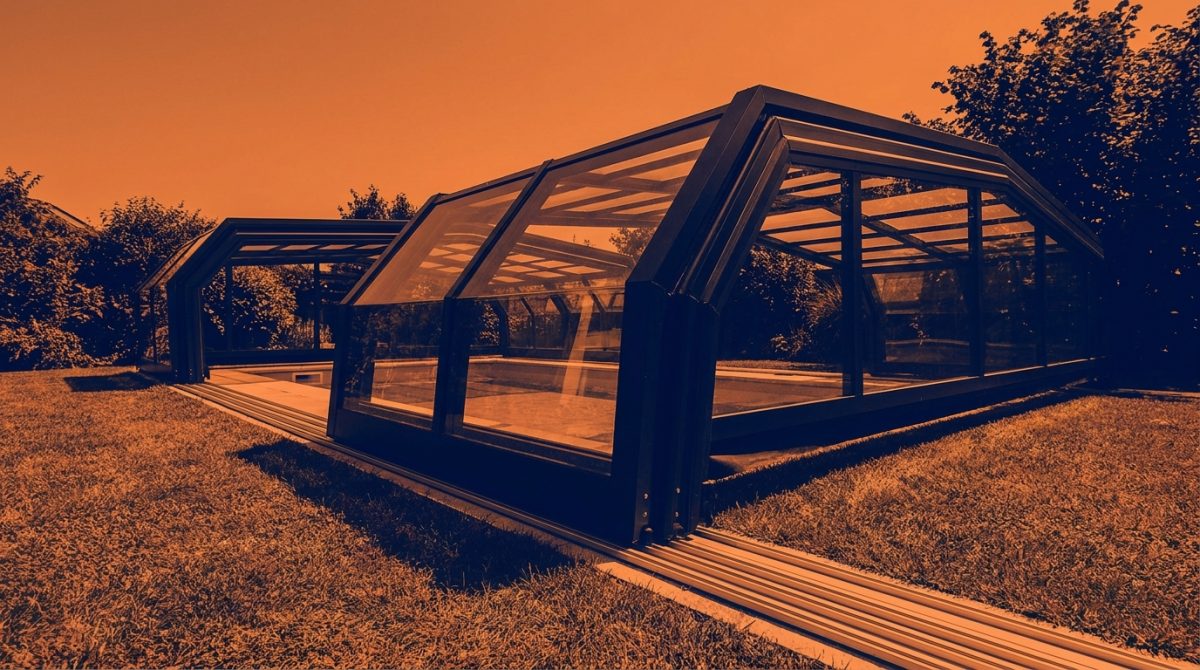
A fixed enclosure is a permanent commitment to one configuration. Telescopic systems offer something more adaptable: the ability to open on warm days and close when the weather turns, which in the UK is a practical advantage rather than a luxury. Sections slide along a track system, stacking at one or both ends of the pool to create a partially or fully open configuration.
From a design standpoint, this flexibility is significant. The enclosure does not impose a single visual character on the garden at all times. On a clear summer afternoon, it retracts and the pool reads as an open-air feature. When closed, the arched aluminium profiles and polycarbonate panels create a clean, considered structure. pool safety products more broadly have moved in this direction, recognising that usability and safety must coexist rather than pull against each other.
Medium and high-profile enclosures bring additional functional benefits, including enough internal height to walk comfortably, change clothes, or place poolside furniture inside the structure. The AZURE and STYLE enclosure formats, for example, use single-radius aluminium profiles to create an arched form that reads as architecturally intentional rather than purely utilitarian. When positioned against a house wall, they can function almost as a glazed extension, creating a transition space between inside and outside.
Finish, Colour, and Material Choices That Shape the Aesthetic
The finish applied to aluminium profiles is one of the simplest ways to align an enclosure with the wider design language of a garden and home. Anodised aluminium in silver remains popular for contemporary settings with stainless steel or glass detailing elsewhere. Anthracite grey has become increasingly requested for gardens with dark timber decking, painted brick, or a more industrial edge to the architecture.
Both finishes resist weathering well in the UK climate, which is relevant given the amount of rain and UV variation the country experiences across a year. Unlike painted steel, which can chip and corrode at the edges over time, anodised and powder-coated aluminium maintains its appearance without requiring ongoing maintenance. That durability is part of what makes aluminium the default structural choice for quality pool enclosures.
Panel selection also affects how the finished structure reads from outside. Tinted polycarbonate panels can reduce glare and give the enclosure a more solid, architectural quality. Clear panels maximise light transmission and keep the water visible from the garden. Some installations use a combination, with solid or opaque lower panels for privacy and clear upper sections to maintain the sense of openness above.
Integrating Fencing and Enclosures Into the Wider Garden Layout
A pool enclosure rarely sits in isolation. It exists within a garden that may include planting, paving, a terrace, and the architecture of the house itself. The most successful installations treat the enclosure as part of a coherent whole rather than an afterthought placed around an existing pool.
Horizontal slat fencing adjacent to an enclosure, or cable rail systems along elevated pool decks, can extend the design language of the structure into the surrounding space. Where an enclosure uses clean horizontal aluminium profiles, picking up that geometry in adjacent fencing or pergola detailing creates continuity. The result is a pool area that feels designed rather than assembled from separate products.
Planting works particularly well alongside low-profile enclosures. Clipped hedging or ornamental grasses at the perimeter of the pool zone can frame the enclosure without obscuring it, giving the whole area a settled, considered appearance. This kind of integration is covered in detail when thinking about garden and home integration for enclosed pool spaces.
Child and Pet Safety Without the Visual Penalty
One of the persistent tensions in pool design has been between the desire for an open, naturalistic pool aesthetic and the practical need to prevent unsupervised access. Traditional pool fencing, particularly the older powder-coated steel palisade styles, solved the safety problem while creating a visual one.
Contemporary aluminium enclosures address this differently. A properly installed telescopic or fixed enclosure forms a complete barrier around the pool, with locking mechanisms that prevent children or pets from opening panels independently. The structure covers the water entirely when closed, which removes the possibility of accidental access rather than simply making it harder. Pooltime and similar UK suppliers offer enclosures specifically positioned as child and pet safety solutions alongside their weather protection benefits.
This matters because a full enclosure is a fundamentally different safety proposition from a fence alone. A fence creates a perimeter, but a determined child or an inquisitive dog may find a way through or under it. An enclosure that closes completely over the water eliminates the gap between perimeter security and water access. The safety benefit is greater, and because the structure is designed as a complete product rather than a fencing assembly, the aesthetic result tends to be more coherent.
Practical Considerations Before You Choose a Design
The design process for a pool enclosure starts with the pool itself, specifically its dimensions, orientation, and relationship to the house and garden. Low-profile enclosures suit exposed gardens where preserving views is a priority. High enclosures work better for pools close to a house wall, where the structure can act as a transitional space.
A few questions worth working through early in the process include:
- How often will you want the enclosure open versus closed across a typical year?
- Does the pool need to be visible from the house for supervision purposes?
- What finish and colour palette would sit naturally alongside the existing garden and building materials?
- Is planning permission likely to be required for the height of the structure you are considering?
Planning permission in the UK depends on the size and height of the structure, its proximity to boundaries, and whether the property is listed or in a conservation area. It is worth confirming requirements before specifying a design rather than discovering constraints late in the process.
The Design Argument for Enclosures Over Fencing Alone
Pool fencing, in its many forms, performs a specific and limited function: it creates a boundary. It does not extend the swimming season, it does not protect water quality, and it does not create a usable covered space beside the pool. A well-specified aluminium enclosure does all of those things while still fulfilling the boundary and safety function.
That broader utility is what makes the investment case for enclosures compelling for most UK homeowners. A pool that can be used comfortably from early spring through late autumn, protected from wind and rain, with a structure that reads as an attractive garden feature, represents a materially different proposition from a pool sitting behind a fence for nine months of the year.
The design thinking that makes this possible is not complex. It comes down to choosing materials with genuine longevity, profiles with considered proportions, and a configuration that works with the specific geometry of your garden rather than against it. Safety is built in from the start, not bolted on as an afterthought, and style follows naturally from that disciplined approach to specification.
