
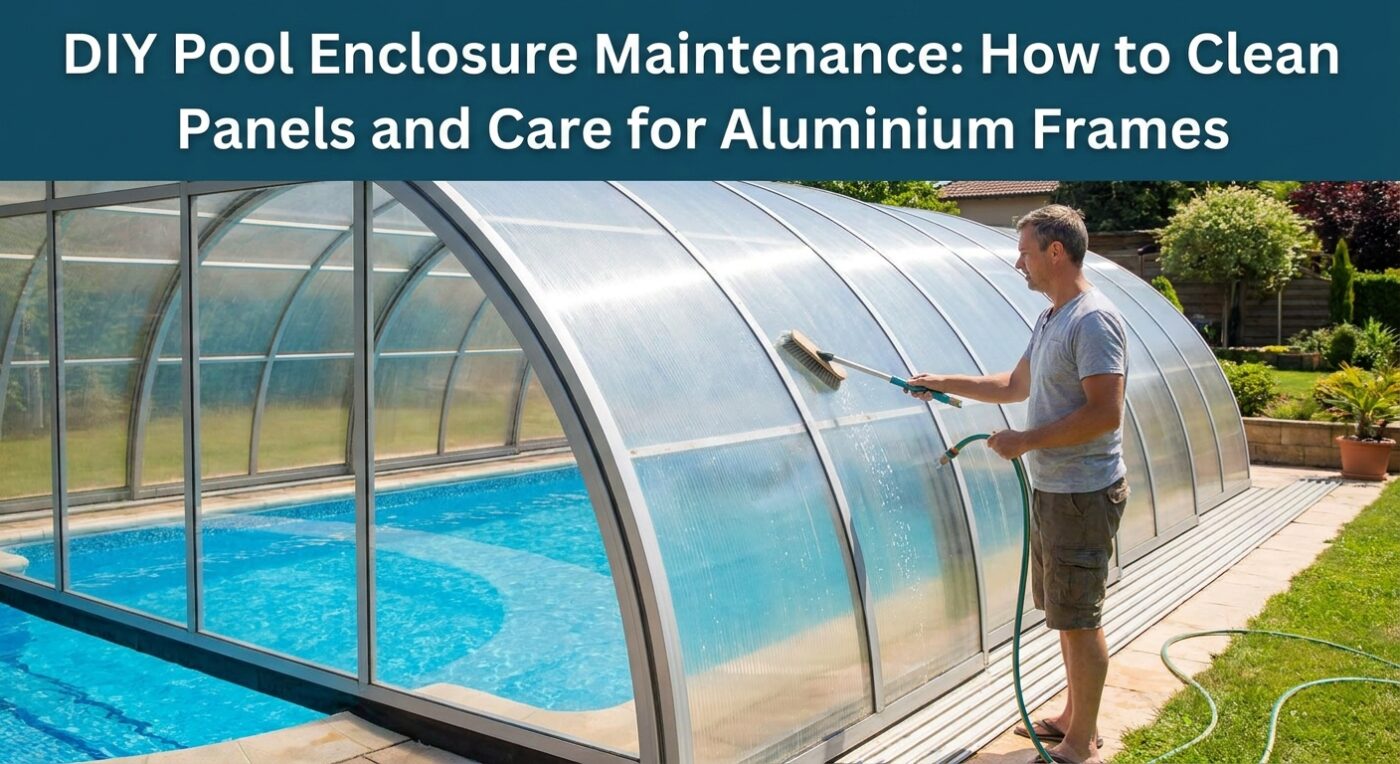
A pool enclosure is a significant investment, and like any structure exposed to the elements, it rewards regular attention. Dust, algae, hard water deposits, and the occasional bird visit all take their toll. The good news is that most maintenance tasks are straightforward, require no specialist tools, and can be done on a dry weekend afternoon.
This guide walks you through everything: cleaning polycarbonate panels without scratching them, keeping aluminium frames looking sharp, and a seasonal checklist to catch small issues before they become expensive ones.
What You Will Need Before You Start
Gathering the right materials first saves a lot of back-and-forth. Using the wrong products is one of the most common mistakes people make, and it can cause permanent damage to polycarbonate surfaces.
- Two clean, soft microfibre cloths or a non-abrasive sponge
- A bucket of warm water
- A pH-neutral, non-abrasive liquid soap (standard washing-up liquid works fine)
- A dedicated polycarbonate cleaner or a mild plastic-safe spray
- Aluminium cleaner or a gentle all-purpose metal cleaner
- A soft-bristle brush for frame joints and drainage channels
- A silicone-based lubricant spray for hinges and sliding mechanisms
- A garden hose with a gentle spray setting
Avoid anything abrasive: scouring pads, wire brushes, solvent-based cleaners, or anything containing ammonia. These will cloud polycarbonate panels and strip protective coatings from aluminium profiles.
Step 1: Rinse the Entire Structure First
Before touching anything with a cloth, give the whole enclosure a thorough rinse with a garden hose. Work from the top down, letting gravity carry loose dirt, pollen, and debris away from the panels. This pre-rinse prevents you from grinding grit into the surface when you start wiping.
Pay particular attention to the roof panels and any recessed channels where leaves and moss tend to collect. A gentle water flow is all you need here. High-pressure jet washing is not recommended for polycarbonate, as it can force water into seals and stress panel fixings over time.
Step 2: Cleaning the Polycarbonate Panels
Mix a small amount of pH-neutral washing-up liquid into a bucket of warm water. Dip a soft microfibre cloth into the solution, wring it out slightly, and work across the panel surface in straight, overlapping strokes. Circular motions tend to spread fine scratches, so keep your movements linear.
For stubborn algae or green staining (common on panels that get partial shade), a dedicated polycarbonate cleaner applied directly to the cloth will dissolve organic matter without attacking the surface. Leave it to dwell for 30 to 60 seconds before wiping off.
Rinse each panel with clean water as you go, rather than letting soapy residue dry on. Dried soap film creates a hazy finish that is harder to remove than the original dirt. Finish with a dry microfibre cloth to prevent water spots, particularly if your tap water is hard.
What to Avoid on Polycarbonate
- Acetone, white spirit, or any solvent cleaner
- Abrasive cream cleaners
- Dry wiping (always wet the surface first)
- Paper towels, which are coarser than they look and can leave micro-scratches
Step 3: Polishing and Caring for Aluminium Frames
Aluminium profiles used in quality enclosures are powder-coated, which gives them excellent resistance to corrosion and UV degradation. That said, the coating still accumulates grime, and coastal locations add salt deposits into the mix.
Clean the frame sections using the same warm soapy water solution from Step 2. A soft-bristle brush is useful here for working into the profile grooves and corner joints where dirt hides. Rinse thoroughly and dry with a clean cloth.
Once or twice a year, apply a quality paste wax or car-grade polymer sealant to the powder-coated surfaces. This adds a thin protective layer that helps water bead off and slows the build-up of environmental deposits. Rub it in with a soft cloth, allow it to haze over (usually five minutes), then buff off with a clean cloth. The difference in how the frame looks over the following months is noticeable.
If you notice any chips or scratches in the powder coating that expose bare aluminium, touch them up promptly with a matching touch-up paint pen. Left exposed, aluminium will oxidise and produce white chalky spots that are much harder to deal with later.
Step 4: Sliding Tracks, Hinges, and Seals
Moving components need their own attention. Sliding panels and hinged sections rely on clean, lubricated tracks to operate smoothly. Grit in the track grooves acts like sandpaper over time, wearing down the rollers and making operation stiff.
Clear the tracks with a soft brush or a vacuum, then wipe them down with a damp cloth. Once dry, apply a silicone-based lubricant spray along the track. Silicone is the right choice here because it does not attract dust the way oil-based lubricants do, and it is safe on rubber seals.
Check all rubber or EPDM seals around the panel edges. They should feel supple, not brittle or cracked. A cracked seal lets water in and reduces the thermal and weather protection your enclosure provides. Replacement seals are available and are a simple swap if you catch the problem early.
Seasonal Inspection Checklist
Twice a year, ideally in spring and autumn, run through a structured inspection. It takes about an hour and is the single most effective thing you can do to extend the life of your enclosure.
- Check all fixings and bolts for tightness, paying attention to roof panel fixings after winter winds
- Inspect drainage channels for blockages from leaf debris
- Test all sliding and hinged sections for smooth operation
- Examine the base seals and any floor channels where the structure meets the pool surround
- Look for any panel discolouration, micro-cracks, or areas where the UV-protective coating may be failing
- Check that any ventilation openings or louvres open and close freely
If you notice any structural concerns, unusual flexing in the frame, or damage that goes beyond cosmetic, contact your enclosure supplier before attempting any repair. Aluminium extrusion systems are engineered to specific tolerances, and amateur modifications can compromise structural integrity.
Keeping on Top of It Through the Year
A light clean every four to six weeks, during the pool season especially, keeps heavy maintenance to a minimum. It takes twenty minutes with a soft cloth and a bucket of soapy water, and it prevents the kind of ingrained staining that turns a simple job into a half-day task.
The result is an enclosure that continues to look as good as it did on installation day, keeps its weather-sealing performance intact, and holds its value as part of your property. A little consistent care makes a serious difference over the years.
